

 By
By In the early 2020s, the world was mesmerized by AI that could talk. We marveled at its ability to write poems, debug code, and summarize long documents. But as we move through 2026, the novelty of “chatting” has worn off, replaced by something far more consequential: Agentic AI.
We are no longer in the era of Artificial Intelligence that simply responds to prompts. We have entered the era of AI that acts.
What is Agentic AI?
Unlike traditional Large Language Models (LLMs) which require constant human “hand-holding” via prompting, Agentic AI systems are designed to perceive, reason, plan, and execute multi-step tasks autonomously.
Imagine an AI that doesn’t just suggest a travel itinerary but actually negotiates with airline APIs, books the flight based on your hidden preferences, and re-routes your Uber in real-time when a delay occurs—all without you clicking a single button. This is the “Year of Truth” for AI, where the technology moves from being a digital assistant to a silicon-based workforce.
1. Physical AI: Bringing Intelligence to the Real World
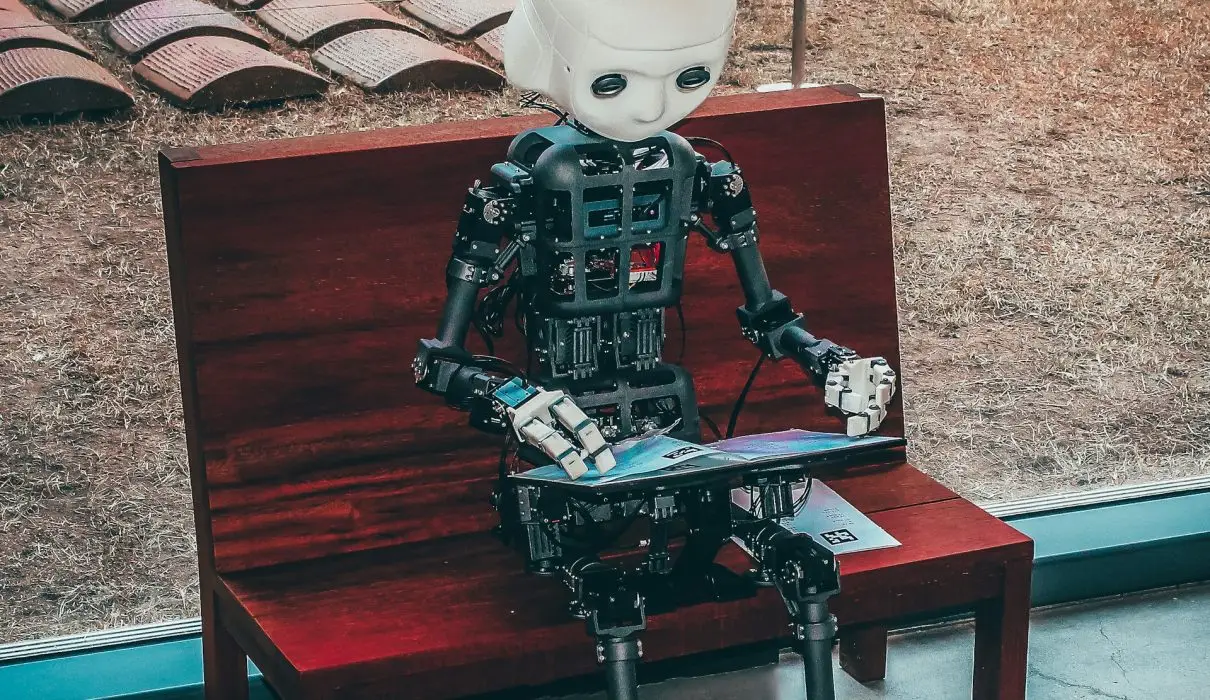
One of the most visible trends in 2026 is the marriage of high-level reasoning and physical robotics, often called Physical AI.
For years, robots were confined to rigid factory lines. Today, powered by edge-computing modules like NVIDIA’s Jetson T4000, robots are entering “greenfield” sectors:
- Healthcare: Autonomous “nurse-bots” managing medication logistics in hospitals.
- Retail: Humanoid robots performing inventory checks and restocking shelves during off-hours.
- Logistics: The rise of “Dark Factories”—fully automated facilities that operate without human intervention, optimized by AI “digital twins.”
According to recent 2026 industry data, shipments of humanoid robots have surged by over 700%, signaling that the barrier between digital intelligence and physical labor has finally collapsed.
2. The Rise of “Geopatriation” and Sovereign AI
As AI becomes the backbone of national economies, we are seeing a retreat from global, borderless platforms. In 2026, Geopatriation has become a critical term for CIOs. Governments and enterprises are shifting their data and models to “Sovereign Clouds” to ensure their data stays within national borders and aligns with local regulations.
This shift is driven by a need for Digital Provenance—the ability to verify the origin and integrity of data. In a world where AI-generated content is everywhere, knowing where a model was trained and who owns the data is now a matter of national security.
3. Preemptive Cybersecurity: The New Defense Standard
With AI agents becoming more sophisticated, so have the threats. Static firewalls are a relic of the past. In 2026, the standard is Preemptive Cybersecurity.
These systems don’t wait for a breach to happen. They use adaptive AI to:
- Anticipate vulnerabilities by simulating millions of attack vectors.
- Neutralize anomalies in real-time using “self-healing” code.
- Enforce a Zero-Trust architecture where every micro-transaction must be verified.
As we move toward 6G Networks, which act more like “neural operating centers” than simple data pipes, the speed of attacks will require defense systems that move at the speed of thought, not the speed of a human analyst.
4. Beyond Lithium: The Energy Revolution
You cannot discuss 2026 technology without addressing the “AI Infrastructure Reckoning.” The massive compute power required for Agentic AI has forced a revolution in energy and cooling.
- Sodium-ion Batteries: Finally hitting the mass market, these provide a cheaper, more sustainable alternative to lithium, especially for large-scale grid storage.
- Microfluidic Cooling: To keep 2026’s super-chips from melting, engineers are now embedding microscopic fluid channels directly into the silicon, removing heat 3x more efficiently than traditional air or liquid cooling.
5. How to Prepare Your Content for 2026 (SEO Tip)
If you are a blogger or business owner, the way you rank is changing. We are moving from SEO (Search Engine Optimization) to GEO (Generative Engine Optimization).
AI-powered search engines no longer just look for keywords; they look for authoritative answers and structured data. To rank in 2026:
- Use JSON-LD Schema: Clearly define your entities so AI agents can “read” your site easily.
- Answer Complex Intent: Don’t just write “What is AI?” Write “How to integrate Agentic AI into a mid-sized supply chain.”
- Prioritize Intimacy: As AI handles the “facts,” human readers will crave first-person experience, unique perspectives, and emotional resonance.
Conclusion: The New Human-Agent Workforce
The takeaway for 2026 is clear: Technology is no longer an external tool we use; it is an active participant in our lives. The most successful organizations won’t be those with the most “people,” but those who best orchestrate hybrid teams of humans, agents, and robots.
The “Year of Truth” is here. The question is no longer what AI can do for you, but what you will do now that the AI can act on its own.